
Magnesium L-Threonate vs. Glycinate: The Definitive Clinical Comparison
Clinical Verdict: Magnesium L-Threonate vs. Glycinate
Choose Magnesium L-Threonate (Magtein) if your primary objective is enhancing working memory, synaptic density, clearing brain fog, and reversing cognitive aging, as it is the only magnesium chelate scientifically proven to cross the blood-brain barrier and elevate cerebral spinal fluid (CSF) magnesium levels by 15%. Choose Magnesium Bisglycinate if your primary goals are restorative physical relaxation, insomnia relief, systemic muscle tension recovery, and budget affordability, as glycine is an inhibitory neurotransmitter that directly promotes deep Stage 3/4 non-REM sleep.
Magnesium is an essential biological macromineral required as an enzymatic cofactor in over 600 biochemical pathways, including cellular ATP synthesis, DNA repair, neurotransmitter synthesis, and neuromuscular stability. Yet clinical epidemiological surveys indicate that over 50% of the United States population fails to meet the Recommended Dietary Allowance (RDA) of 320mg to 420mg daily. Chronic magnesium insufficiency leads to neuronal hyperexcitability, elevated cortisol, chronic insomnia, and accelerated synaptic pruning.
However, traditional over-the-counter magnesium supplements (such as magnesium oxide, magnesium citrate, or magnesium carbonate) exhibit poor gastrointestinal bioavailability, frequently triggering osmotic diarrhea before meaningful cellular repletion occurs. This has made chelated magnesium compounds the dominant clinical standard. Today, the two most sought-after forms are Magnesium L-Threonate (patented as Magtein) and Magnesium Bisglycinate. Below, our medical review panel breaks down the exact pharmacological, clinical, and financial differences between these two leading compounds.

Find Your Personalized Brain Supplement Match
Take our 60-second clinical quiz to determine your exact neurochemical profile, neurotransmitter balance, and receive an individualized dietary supplement protocol backed by human RCT trials.
Head-to-Head Comparison: Magnesium L-Threonate vs. Bisglycinate
Featured Products: Top Magnesium L-Threonate & Glycinate Brands
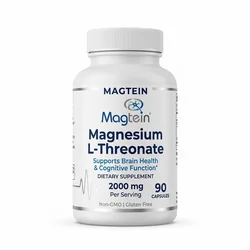
1. Life Extension Neuro-Mag – Best Overall Magnesium L-Threonate (Magtein)
Gold Standard for BrainLife Extension Neuro-Mag provides the original patented Magtein formula developed by neuroscientists at MIT. Delivering 2,000mg of magnesium L-threonate (yielding 144mg of elemental magnesium) per 3-capsule serving, Neuro-Mag is designed specifically to permeate the blood-brain barrier, increase synaptic density in the hippocampus, and reverse functional brain aging markers.
✓ Clinical Strengths
- Features authentic, peer-reviewed Magtein clinically verified in human cognitive trials
- Shown in human trials to improve executive function, working memory, and episodic recall
- Non-GMO, vegetarian capsules with zero synthetic binders or harsh additives
- Highly bioavailable without causing digestive looseness or gastrointestinal cramping
⚠ Practical Considerations
- Requires taking 3 capsules daily to achieve the clinically studied 2,000mg dose
- Premium price ($32–$36/month) due to the proprietary Magtein patent
2. Thorne Magnesium Bisglycinate – Best Overall Magnesium for Deep Sleep & Relaxation
Top Clinical Sleep PickThorne Magnesium Bisglycinate is an NSF Certified for Sport powder delivering 200mg of elemental magnesium chelated with two molecules of glycine. This bisglycinate bond shields magnesium from stomach acid, allowing intact absorption through the intestinal peptide pathways. The bonded glycine delivers an inhibitory GABAergic calming effect that lowers nocturnal core body temperature and promotes restorative REM and slow-wave deep sleep.
✓ Clinical Strengths
- NSF Certified for Sport, ensuring strict third-party screening for 200+ banned substances
- Delivers 200mg elemental magnesium bound to relaxing glycine with zero magnesium oxide dilution
- Lightly sweetened with monk fruit; mixes cleanly into warm water before bed
- Eliminates muscle twitches, leg restlessness, and nocturnal waking without morning grogginess
⚠ Practical Considerations
- Powder format requires mixing in water (not a pre-measured capsule)
- Focuses on somatic relaxation and sleep architecture rather than direct brain synaptic density
3. Double Wood Magtein – Best Value Magnesium L-Threonate Capsules
Best Value MagteinDouble Wood Supplements offers an economical entry point to patented Magtein. Sourced under official license from AIDP, Inc., this formulation provides 2,000mg of magnesium L-threonate per serving with 100 capsules per bottle. Double Wood provides publicly accessible third-party COAs verifying purity, elemental magnesium yield, and heavy metal compliance.
✓ Clinical Strengths
- Authentic licensed Magtein at one of the lowest price points per gram on the US market
- Verified by third-party testing with full certificate transparency
- Supports clear daytime thinking, focus stability, and stress mitigation
- Manufactured in a certified cGMP facility in the USA
⚠ Practical Considerations
- Capsules contain gelatin (not suitable for vegetarians or vegans)
- Dosing requires 4 capsules daily to reach the full 2,000mg threshold
4. Pure Encapsulations Magnesium Glycinate – Best Hypoallergenic Capsule for Sleep
Hypoallergenic StandardPure Encapsulations Magnesium Glycinate is formulated for individuals with sensitive gastrointestinal tracts and chemical sensitivities. Each capsule delivers 120mg of elemental magnesium bound to glycine, verified free from artificial additives, magnesium stearate, gluten, wheat, and environmental contaminants.
✓ Clinical Strengths
- Hypoallergenic formulation free of artificial colors, preservatives, and common allergens
- Gentle on sensitive digestive tracts; zero risk of osmotic loose stools
- Convenient capsule delivery for travelers who prefer not to mix nighttime powders
- Excellent for reducing nighttime cortisol, muscle tension, and physical anxiety
⚠ Practical Considerations
- Requires 2 to 3 capsules to achieve a full 240mg–360mg therapeutic evening dose
- Does not penetrate the cerebrospinal fluid to the extent of L-threonate
The Blood-Brain Barrier Dilemma: Why Most Magnesium Fails to Reach the Brain
The brain is protected by the tightly regulated blood-brain barrier (BBB), an endothelial cellular shield that restricts the passive diffusion of systemic ions into cerebrospinal fluid (CSF). While taking standard magnesium forms (citrate, oxide, malate) effectively raises serum magnesium in the bloodstream, the regulatory transport systems at the BBB actively limit magnesium influx.
In pioneering research conducted at the Massachusetts Institute of Technology (MIT) by Dr. Guosong Liu and colleagues (Slutsky et al., 2010), scientists screened dozens of magnesium compounds to determine which molecule could bypass this biological checkpoint. They discovered that L-threonate—a natural vitamin C metabolite—acts as a specialized cellular chaperone.
The Slutsky et al. (2010) Discovery
While oral administration of conventional magnesium compounds elevated serum magnesium without significantly altering CSF levels, Magnesium L-Threonate elevated cerebrospinal fluid magnesium by 15%. This localized elevation triggered a 56% increase in functional synaptic density in the hippocampus and enhanced NMDA receptor signaling, leading to dramatic improvements in spatial working memory, pattern recognition, and learning speed.
Human Clinical Trial: Reversing 9 Years of Cognitive Aging
The preclinical MIT discoveries were formally validated in human clinical trials. In a randomized, double-blind, placebo-controlled clinical study published by Liu et al. (2016) in the Journal of Alzheimer's Disease, adults aged 50 to 70 with self-reported cognitive impairment received 1.5g to 2.0g of Magnesium L-Threonate (Magtein) daily for 12 weeks:
- Reversal of Brain Age: Subjects in the Magtein cohort exhibited a statistically significant reduction in clinical brain age, effectively reversing cognitive performance deficits by approximately 9.0 years compared to baseline.
- Executive Function & Processing Speed: Trail Making Tests demonstrated marked enhancements in executive switching capacity and mental processing velocity.
- Memory Recall Stability: Episodic working memory tests showed sustained retention improvements that persisted even after stressful cognitive challenges.
The Glycine Advantage: Why Bisglycinate Dominates Sleep Architecture
While Magnesium L-Threonate holds the crown for direct synaptic density and memory enhancement, Magnesium Bisglycinate possesses a distinct pharmacological advantage for sleep and physical anxiety: the presence of glycine.
Glycine is a primary inhibitory neurotransmitter in the human brainstem and spinal cord. It co-activates NMDA receptors while binding to specific inhibitory glycine receptors, generating profound somatic calm. Clinical sleep research conducted in Japan demonstrates that 3 grams of glycine ingested prior to sleep:
- Induces peripheral vasodilation, naturally lowering nocturnal core body temperature—the biological trigger for deep slow-wave sleep.
- Shortens sleep onset latency (the time it takes to fall asleep) and stabilizes sleep architecture throughout the night.
- Eliminates next-day morning grogginess, leaving subjects feeling mentally refreshed and alert upon waking.
The Optimal Strategy: Can You Take Both Together?
Because Magnesium L-Threonate and Magnesium Bisglycinate target complementary physiological pathways, many functional medicine practitioners and biohackers employ a Split-Dose Protocol:
The 24-Hour Clinical Magnesium Protocol
Morning / Early Afternoon: Take 1,000 mg to 1,500 mg of Magnesium L-Threonate (Magtein) with breakfast. This crosses the blood-brain barrier during active working hours, supporting synaptic plasticity, working memory, and mental clarity without sedation.
Evening (60 Minutes Pre-Bed): Take 200 mg of elemental Magnesium Bisglycinate with warm water or herbal tea. The bonded glycine lowers core temperature and calms the somatic nervous system, guiding you into deep, restorative slow-wave sleep.
Related Clinical Guides & Cognitive Research
Explore companion evidence-based reviews and pharmacology guides from our medical panel:
Magnesium L-Threonate Benefits & Dosage →
Complete clinical guide on Magtein dosage, brain bioavailability, and synaptic repair.
Sleep and Brain Health Guide →
How circadian sleep architecture directly impacts glymphatic brain detoxification and memory.
Best Nootropics for Anxiety & Focus →
Top calming nootropics that quiet mental chatter without causing daytime sedation.
L-Theanine & Caffeine Ratio Guide →
The classic nootropic pairing for clean alert relaxation and smooth mental flow.
Frequently Asked Questions (Clinical FAQ)
BrainFort USA Editorial & Medical Review Panel
Dr. Marcus Vance, Ph.D.
Lead Neuropharmacology Researcher
Ph.D. in Cellular Neurobiology from Columbia University. Active member of the Society for Neuroscience. Specializes in cholinergic neurotransmission, catecholamines, and nootropic kinetics.
Dr. Elena Rostova, M.D.
Consulting Neurologist & Medical Reviewer
M.D. from Johns Hopkins University School of Medicine. Board-certified neurologist and Fellow of the American Academy of Neurology. Audits all clinical dosages and drug safety profiles.
Primary Peer-Reviewed Clinical References
- [1] Slutsky I, Abumaria N, Wu LJ, et al. Enhancement of learning and memory by elevating brain magnesium. Neuron. 2010;65(2):165-177.
- [2] Liu G, Weinger JG, Lu ZL, et al. Efficacy and Safety of MMFS-01, a Synapse Density Enhancer, for Treating Cognitive Impairment in Older Adults: A Randomized, Double-Blind, Placebo-Controlled Trial. J Alzheimers Dis. 2016;49(4):971-990.
- [3] Yamoto K, Inagawa K, Chiba S, et al. The effects of glycine on subjective daytime performance in partially sleep-restricted healthy volunteers. Front Neurol. 2012;3:61.
- [4] Boyle NB, Lawton C, Dye L. The Effects of Magnesium Supplementation on Subjective Anxiety and Stress-A Systematic Review. Nutrients. 2017;9(5):429.
- [5] Wienecke E, Nolden C. Long-term HRV analysis shows stress reduction by magnesium intake. MMW Fortschr Med. 2016;158(Suppl 6):12-16.