
Focus Factor Review (2026): Formula Analysis, Clinical Evidence & Pricing
This clinical product evaluation was drafted by neuropharmacology researcher Dr. Marcus Vance, Ph.D. and rigorously scrutinized by board-certified neurologist Dr. Elena Rostova, M.D. to ensure therapeutic dosage validity, physiological plausibility, and safety warnings.
Focus Factor Original & Extra Strength
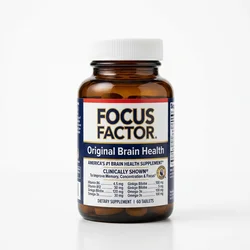
Executive Verdict: Focus Factor Original Formula
Focus Factor (produced by Synergy CHC) is one of the most commercially recognizable "brain vitamins" in North America, sold in bulk at Costco, Walmart, CVS, and Amazon. However, our neuropharmacology audit reveals that while Focus Factor functions adequately as a broad-spectrum multivitamin, its dedicated nootropic potency is severely limited. Its active cognitive compounds are sequestered inside a 640 mg proprietary blend containing over 12 ingredients—meaning critical memory compounds like Bacopa and Phosphatidylserine are provided at fractions of their validated clinical doses.
1. In-Depth Formula Audit: The 640mg Proprietary Blend vs. Clinical Benchmarks
The daily recommended intake for Focus Factor Original is 4 large tablets daily. The formulation is divided into two distinct components: a standard multivitamin/mineral complex and a 640 mg proprietary herbal matrix.
| Key Active Compound | Focus Factor Stated Dose | Clinical Benchmark Dose | Pharmacological Evaluation |
|---|---|---|---|
| DMAE (Dimethylaminoethanol) | Inside 640mg blend | 100 mg – 200 mg | Choline precursor; primary bulk ingredient in the 640mg matrix. |
| Bacopa Monnieri Extract | Estimated <50 mg | 300 mg (standardized 50%) | Severely Underdosed – Insufficient for hippocampal synaptic remodeling. |
| Phosphatidylserine (PS) | Estimated <30 mg | 100 mg – 300 mg | Sub-Therapeutic – Far below doses proven to support neuronal membranes. |
| L-Glutamine & Pyroglutamic Acid | Inside 640mg blend | 500 mg – 1,000 mg | Amino acid precursors for glutamate neurotransmission; underdosed. |
| Vinpocetine & Huperzine A | Trace amounts in blend | 10mg (Vinpo) / 200mcg (Hup) | Micro-dosed; Vinpocetine requires pregnancy safety warnings. |
| Niacin (Vitamin B3) | 50 mg (313% DV) | 16 mg (100% DV) | High dose; can trigger transient cutaneous flushing and skin warmth. |
| Zinc (as amino acid chelate) | 15 mg (136% DV) | 11 mg (100% DV) | High daily level; avoid stacking with other zinc-rich multivitamins. |
The Mathematical Reality of the 640 mg Proprietary Blend
Focus Factor groups 13 active botanical and chemical constituents inside a total weight of 640 milligrams. Because DMAE and L-Glutamine typically demand 200 mg to 500 mg each to exert meaningful metabolic activity, the remaining botanical fractions—specifically Bacopa monnieri, Bilberry extract, Grape Seed extract, and Phosphatidylserine—cannot physically exceed 20 mg to 50 mg each. In clinical neuroscience, Bacopa requires 300 mg daily of a standardized extract to produce measurable memory gains. Focus Factor is simply under-formulated for therapeutic cognitive support.
2. Clinical Trial Scrutiny: The 2003 Study & Regulatory History
Focus Factor marketing heavily emphasizes that the product is "clinically proven to improve memory and focus." What does the actual published research show?
The 2003 Cognitive Research Corporation (CRC) Study
The primary clinical backing for Focus Factor comes from a 6-week, double-blind, placebo-controlled study conducted in 2003 by Cognitive Research Corporation on 96 healthy adults aged 18 to 65. Subjects completed the Rey Auditory Verbal Learning Test (RAVLT).
- Study Findings: Subjects taking Focus Factor demonstrated an improvement of 44 words recalled on the RAVLT compared to 28 words recalled in the placebo group after 6 weeks.
- Publication Limitations: The study was never published in a top-tier peer-reviewed neurology journal (such as The Lancet Neurology or Neurology), meaning it did not undergo the rigorous external scrutiny typical of pharmaceutical and clinical-grade nootropics.
- FTC Regulatory Settlement (2004): In 2004, the Federal Trade Commission (FTC) charged the original marketers of Focus Factor (Vital Basics, Inc.) with deceptive advertising, alleging that infomercial claims of curing severe memory loss and working for children with ADHD were unsubstantiated. The marketers agreed to pay a $1 million penalty and cease making unauthorized disease claims. Current owner Synergy CHC now adheres to standard dietary structure/function claims.
3. Potential Benefits vs. Major Formulation Weaknesses
Potential Benefits
- Broad-Spectrum Multivitamin Base: Delivers essential micronutrients including Vitamins A, C, D, E, B6, B12, and Zinc, eliminating the need for a separate basic multivitamin.
- Affordable & Accessible: Sold widely at Costco, Walmart, and pharmacies for under $0.50 – $0.80 per daily serving when purchased in large bulk bottles.
- 100% Caffeine-Free: Does not cause the jitters, cardiovascular spikes, or insomnia associated with energy drinks or high-stimulant focus pills.
Major Weaknesses
- Severe Underdosing of Nootropics: Bacopa, Phosphatidylserine, and Glutamine are diluted across a 640 mg proprietary blend.
- High Daily Tablet Count: Requires taking 4 large tablets daily, which many consumers find difficult to swallow comfortably.
- Contains Vinpocetine: The FDA issued a safety warning in 2019 advising pregnant women and women of childbearing age against taking Vinpocetine due to fetal toxicity risks.
- Niacin Flush Risk: 50 mg of Niacin (313% DV) may cause temporary skin flushing and warmth in sensitive individuals.
4. Comparison Hub: Focus Factor vs. Neuriva vs. Prevagen vs. Alpha BRAIN
Retail pharmacy shoppers frequently choose between Focus Factor, Neuriva, Prevagen, and Alpha BRAIN. Below is how these four retail giants compare across clinical metrics:
| Supplement | Daily Serving | Primary Active Mechanism | Clinical Trial Rigor | Monthly Cost | Detailed Showdown |
|---|---|---|---|---|---|
| Focus Factor | 4 Tablets | Multivitamin + 640mg blend (DMAE, Bacopa, PS, Vinpocetine) | Single 2003 pilot study (96 adults); FTC settlement history | $19.99 – $39.99 | Baseline Commercial Audit |
| Neuriva Plus | 1 Capsule | Coffee Cherry Extract (Neurofactor 100mg) + PS (100mg) + B-Vitamins | Double-blind trials show BDNF elevation from Neurofactor | $32.99 – $44.99 | Neuriva vs Focus Factor → |
| Prevagen | 1 Chewable | Apoaequorin (10mg – 20mg jellyfish protein) + Vitamin D3 | Digestive enzyme breakdown degrades protein; FTC litigation | $39.95 – $69.95 | Focus Factor vs Prevagen → |
| Alpha BRAIN | 2 Capsules | Alpha-GPC, Huperzia serrata, Bacopa, AC-11, L-Tyrosine | Boston Center for Memory RCT (Solomon et al. 2016) | $79.95 | Onnit Alpha BRAIN Review → |
5. Retail Availability, Pricing & Value Assessment
Focus Factor is available in multiple package sizes across major retail pharmacies:
- Costco Wholesale (150 – 180 Tablets): Typically priced between $21.99 and $26.99 (roughly $0.50 to $0.65 per daily serving of 4 tablets). Represents the best bulk value.
- Walmart & Target (60 – 90 Tablets): Priced between $14.99 and $19.99 for a 15 to 22-day supply.
- CVS & Walgreens (150 Tablets): Often listed at $29.99 to $39.99 unless participating in Buy-One-Get-One retail promotions.
- Value Verdict: If you are seeking an affordable multivitamin with a dusting of brain herbs, Focus Factor is inexpensive. However, if your goal is clinical-grade cognitive enhancement, purchasing underdosed ingredients delivers poor return on investment compared to dedicated formulations like Mind Lab Pro or NooCube.
6. Clinical Safety Profile, Side Effects & Pregnancy Warnings
- Pregnancy Warning (Vinpocetine): In June 2019, the U.S. Food and Drug Administration issued a formal safety communication warning that Vinpocetine may cause fetal toxicity or miscarriage. Pregnant women and women planning to become pregnant should not consume Focus Factor.
- Niacin Flush: Focus Factor contains 50 mg of Niacin (313% DV). In sensitive individuals, this can trigger a harmless but alarming "niacin flush"—red, hot, tingling skin across the face, neck, and arms lasting 20 to 45 minutes. Taking the tablets with a substantial meal reduces flush frequency.
- Total Zinc Intake: At 15 mg of Zinc per serving, avoid combining Focus Factor with other zinc lozenges or high-dose immune supplements to avoid exceeding the 40 mg daily tolerable upper intake level.
Related BrainFort USA Clinical Audits & Comparisons
Frequently Asked Questions: Focus Factor Review
Does Focus Factor actually improve memory and focus?
Focus Factor provides broad-spectrum vitamins that support basic metabolic brain function. However, its dedicated nootropic herbs (Bacopa, Phosphatidylserine, DMAE) are locked in a 640 mg proprietary blend, resulting in doses far below those validated in human clinical trials. It may help prevent micronutrient deficiencies, but will not produce the robust cognitive enhancement of properly dosed nootropic stacks.
Why do you have to take 4 pills of Focus Factor daily?
Because combining full-spectrum vitamins, minerals (calcium, magnesium), and a 640 mg herbal blend requires substantial physical volume, the manufacturer must distribute the powder across 4 large tablets daily. Many users find this high pill count difficult to sustain long-term.
Is Focus Factor better than Neuriva or Prevagen?
Compared to Prevagen (which relies on jellyfish protein degraded in digestion), Focus Factor offers superior overall value due to its full multivitamin base. However, Neuriva Plus offers a cleaner, single-capsule daily dose with clinically validated Neurofactor (coffee cherry extract) that increases BDNF, making Neuriva superior for convenience and specific brain-derived neurotrophic support.
Can Focus Factor cause side effects?
Yes. Its 50 mg Niacin content can trigger a harmless but uncomfortable skin flush (redness and itching). Additionally, Focus Factor contains Vinpocetine, which carries a formal FDA safety warning advising pregnant women against use due to risks of fetal toxicity.