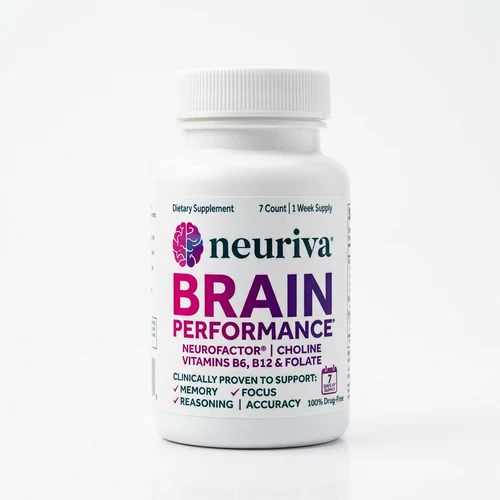
Neuriva Brain Performance Plus outclasses Focus Factor for targeted cognitive enhancement, though both pharmacy brands have inherent limitations. Neuriva utilizes clinically validated Coffee Fruit Extract (Neurofactor™) to stimulate BDNF alongside plant-sourced Phosphatidylserine in a convenient single-capsule daily dose. Focus Factor is essentially a standard multivitamin loaded with a 640mg proprietary blend that dilutes 15+ nootropics into underdosed trace amounts across 4 large daily tablets.
Walk down the supplement aisle of any major American pharmacy—Walgreens, CVS, Rite Aid, or grocery giants like Walmart and Costco—and you will inevitably find two prominent contenders dominating the brain health shelf: Schiff's Neuriva and Synergy CHC's Focus Factor.
Backed by heavy television advertising and celebrity endorsements, both products generate tens of millions in annual retail revenue. But what does the clinical pharmacology actually reveal once you bypass the commercial marketing? Below is our comprehensive 2026 head-to-head comparison examining active ingredients, neuro-metabolic mechanisms, clinical study validation, pill burdens, and value for your money.
Free 60-Second Clinical Assessment
Looking for Sustained Executive Focus & Drive?
Take our 60-second assessment to discover clean, jitter-free dopaminergic and cholinergic nootropics matched to your workday routine.
2. Focus Factor Original – High-Dose Multivitamin with Underdosed Blend
Pharmacy Multivitamin
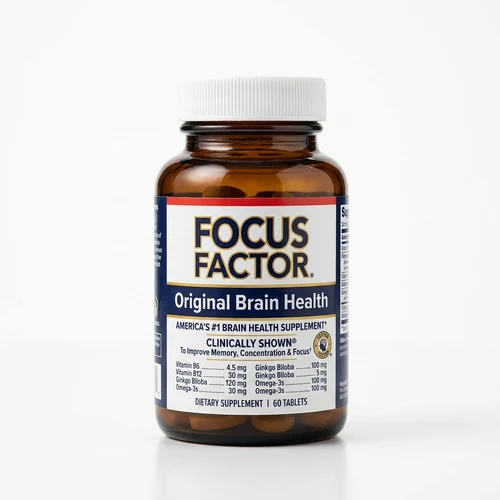
Focus Factor is one of America's longest-running retail brain supplements, widely distributed in supermarkets and warehouse clubs. While it functions well as a comprehensive daily multivitamin and mineral complex, its cognitive benefits are severely limited by a 640mg proprietary blend that dilutes over 15 active nootropics into clinically negligible trace amounts.
✓ Clinical Strengths
Comprehensive multivitamin base replacing your daily standard multivitamin
Includes DMAE, Bacopa, Phosphatidylserine, and Ginkgo in the blend
Backed by a company-funded clinical trial on memory recall in healthy adults
Very low cost per tablet when purchased in bulk warehouse bottles
⚠ Practical Considerations
Requires swallowing 4 large, chalky tablets daily
640mg proprietary blend guarantees most cognitive ingredients are severely underdosed
Contains DMAE, which may cause headaches and muscle stiffness in sensitive individuals
3. Mind Lab Pro – The Clinical Upgrade (Superior to Drugstore Brands)
Clinical Grade Upgrade
For consumers who find drugstore supplements inadequate, Mind Lab Pro represents the gold standard in evidence-based cognitive nutrition. Providing 11 clinical-grade ingredients at full therapeutic dosages with zero proprietary blends, it outclasses both Neuriva and Focus Factor across memory, mental speed, and long-term neuroprotection.
✓ Clinical Strengths
11 fully disclosed, research-backed nootropics at full therapeutic dosages
Cognizin® Citicoline elevates brain ATP by 13.6% and repairs neural membranes
Full-spectrum Lion's Mane mushroom and Bacopa Monnieri for neurogenesis
Zero synthetic binders, artificial colors, or cheap multivitamin fillers
⚠ Practical Considerations
Higher price point than drugstore options ($69 per bottle)
Available exclusively online rather than brick-and-mortar retail shelves
Active Mechanism Breakdown: Neurofactor™ vs. The 640mg Kitchen Sink
Neuriva and Focus Factor dominate retail pharmacy shelves at Walgreens, CVS, Costco, and Walmart. Millions of consumers purchase them expecting significant cognitive restoration. However, when analyzed through the lens of neuropharmacology, their formulas embody diametrically opposed product design strategies.
Neuriva Brain Performance Plus focuses on a minimalist, mechanism-driven formula. Its core active compound is Neurofactor™ (100mg), an extract of the whole coffee fruit (Coffea arabica). In published clinical trials (Reyes-Izquierdo et al., 2013), Neurofactor™ was proven to increase circulating plasma levels of Brain-Derived Neurotrophic Factor (BDNF) by 143% within 60 to 120 minutes of ingestion. BDNF is an essential neurotrophin that stimulates neurogenesis, promotes synaptic plasticity, and protects neurons from apoptosis. Neuriva combines this with 100mg of plant-sourced Phosphatidylserine (Sharp-PS) to support cell membrane fluidity.
In contrast, Focus Factor Original utilizes what pharmacological reviewers refer to as a "kitchen-sink proprietary blend." Focus Factor hides over 15 distinct active botanical and amino compounds inside a 640mg proprietary blend. In clinical research, Bacopa Monnieri requires 300mg to 450mg for memory benefits, Phosphatidylserine requires 100mg to 300mg, and L-Glutamine requires 500mg+. Squeezing 15 separate ingredients into a single 640mg total weight guarantees that virtually every active nootropic in Focus Factor is present in biologically sub-therapeutic trace amounts.
The Multivitamin Reality: What Are You Actually Paying For?
A major consumer complaint regarding Focus Factor is the mandatory daily serving size of 4 large, chalky tablets. The reason for this substantial pill burden is that Focus Factor is fundamentally a standard multivitamin and mineral complex masked as a nootropic.
The overwhelming bulk of each Focus Factor tablet is composed of Vitamin C, Calcium, Vitamin E, Iron, Magnesium, and Zinc. While correcting micronutrient deficiencies is vital for systemic health, consumers can purchase a top-tier multivitamin for a fraction of Focus Factor's retail price. Neuriva Plus requires only 1 compact capsule daily, delivering full compliance and targeting neuro-B vitamins without requiring you to swallow multiple bulky tablets.
Clinical Trial Scrutiny & Regulatory History
Both brands claim clinical validation, but their evidentiary foundations differ significantly:
Focus Factor's Trial History: In 2004, the Federal Trade Commission (FTC) took regulatory action against Focus Factor's original marketers for unsubstantiated advertising claims. Subsequently, the company funded a 6-week clinical trial in 96 healthy adults showing improvements in immediate and delayed word recall. However, independent replications remain scarce.
Neuriva's Trial History: Schiff (Reckitt Benckiser) funded multiple double-blind RCTs on its finished formula and raw ingredients. Trials confirmed that whole coffee fruit extract significantly elevates BDNF and that Phosphatidylserine supports age-associated memory impairment. Nevertheless, in 2021, Schiff settled a class-action lawsuit regarding advertising claims, agreeing to modify its marketing language to better reflect the scientific consensus.
Related Clinical Guides & Cognitive Research
Explore companion evidence-based reviews and pharmacology guides from our medical panel:
Neuriva is significantly better as a targeted brain supplement. It uses clinically validated Neurofactor to stimulate Brain-Derived Neurotrophic Factor (BDNF) and therapeutic Phosphatidylserine in a convenient single-capsule daily dose. Focus Factor is primarily a multivitamin with an underdosed 640mg proprietary blend requiring 4 large tablets daily.
Q2
Does Neuriva actually increase BDNF in the brain?
+
Human clinical trials published in peer-reviewed journals demonstrate that 100mg of Neurofactor (the exact dose in Neuriva) elevates circulating plasma BDNF by 143% within 2 hours of ingestion. BDNF plays a crucial role in synaptic neuroplasticity, memory consolidation, and neuronal resilience.
Q3
Why does Focus Factor require taking 4 tablets a day?
+
Focus Factor is loaded with bulky vitamins and minerals (such as calcium, magnesium, vitamin C, and vitamin E) that physically require substantial tablet volume. The cognitive nootropic blend only accounts for 640mg out of the several thousand milligrams of total tablet weight.
Q4
Are either of these drugstore supplements as good as Mind Lab Pro?
+
No. While Neuriva is decent for basic BDNF stimulation, premium nootropics like Mind Lab Pro provide 11 fully disclosed, clinical-grade ingredients (including 250mg Cognizin Citicoline, Lion's Mane, Bacopa, and L-Tyrosine) that address brain energy, cerebral blood flow, and neuro-regeneration far more completely than any pharmacy-brand pill. Check our Mind Lab Pro review.
Q5
Can I take Neuriva if I already take a daily multivitamin?
+
Yes. Neuriva Brain Performance Plus only adds Vitamins B6, B12, and Folate, which are water-soluble and generally safe alongside a standard multivitamin. In contrast, taking Focus Factor alongside another multivitamin could lead to excessive intake of fat-soluble vitamins (such as Vitamin A and Iron).
Q6
Does Neuriva contain caffeine?
+
No. Although Neurofactor is derived from the fruit of the Coffea arabica plant, the extract is decaffeinated and contains less than 1% caffeine (less than 1 milligram per capsule), making it safe for individuals sensitive to caffeine.
Q7
What is the difference between Neuriva Original and Neuriva Plus?
+
Neuriva Original contains only Neurofactor (100mg) and Phosphatidylserine (100mg). Neuriva Plus adds Vitamins B6 (1.7mg), B12 (2.4mcg), and Folate (680mcg DFE) to support healthy homocysteine metabolism and nervous system integrity.
Ph.D. in Cellular Neurobiology from Columbia University. Active member of the Society for Neuroscience. Specializes in cholinergic neurotransmission, catecholamines, and nootropic kinetics.
M.D. from Johns Hopkins University School of Medicine. Board-certified neurologist and Fellow of the American Academy of Neurology. Audits all clinical dosages and drug safety profiles.
Editorial Independence: Our panel maintains zero financial relationships with supplement manufacturers.View Full Editorial Board →
Primary Peer-Reviewed Clinical References
[1] Reyes-Izquierdo T, et al. (2013). Modulatory effect of coffee fruit extract on ontogeny of plasma brain-derived neurotrophic factor. Br J Nutr, 110(3), 438-445. (PMID: 23312069)
[2] Crook TH, et al. (1991). Effects of phosphatidylserine in age-associated memory impairment. Neurology, 41(5), 644-649. (PMID: 2027477)
[3] Robinson N, et al. (2014). Cognitive effects of a dietary supplement in healthy adults: A randomized, double-blind, placebo-controlled trial. J Aging Res Clin Pract, 3(1), 32-38.
[4] Cenacchi B, et al. (1993). Cognitive decline in the elderly: a double-blind, placebo-controlled multicenter study on efficacy of phosphatidylserine administration. Aging (Milano), 5(2), 123-133. (PMID: 8323999)
[5] Kennedy DO. (2016). B Vitamins and the Brain: Mechanisms, Dose and Efficacy--A Review. Nutrients, 8(2), 68. (PMID: 26828517)

 Neuriva Plus Brain Performance Bottle
 Focus Factor Original Bottle